5 Places Most Likely to Leak (and How to Check Them)
Leaks cluster around five usual suspects: water heater, dishwasher, washing machine, bathroom, and sink plumbing. What to check, and the early signs.
Co-written with AI assistance from Claude Opus.
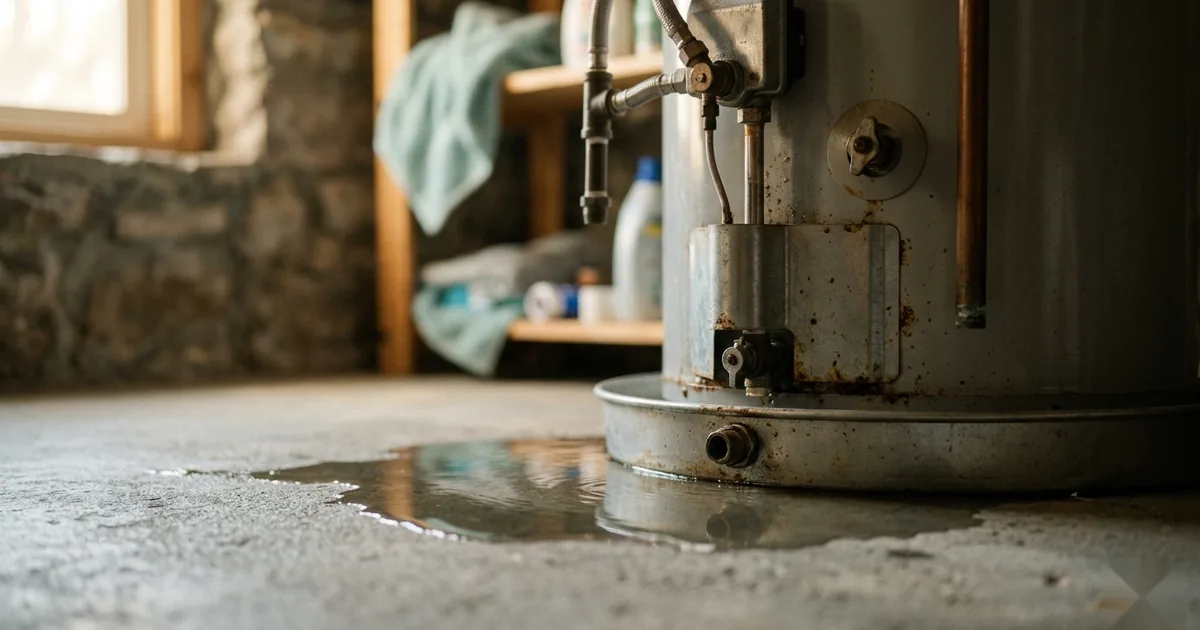
Leaks are predictable, if you know where to look
Water can escape anywhere there is a pipe, a hose, or a connection, but in practice most household leaks come from a short list of the same repeat offenders. The good news: if you know the usual suspects, you can check them in a few minutes and catch trouble long before it turns into damage.
Here are the five places most likely to leak, what to inspect at each, and the early warning signs that mean it is time to act.
1. The water heater
Water heaters are a top source of serious leaks, and they tend to fail with age. Most units last around 8 to 12 years, and a tank that lets go can release its entire contents at once.
What to check: Look for rust or corrosion around the base and fittings, moisture or pooling underneath, and any dripping from the temperature-and-pressure relief valve. Note the unit’s age; if it is past a decade, treat it as living on borrowed time.
Warning signs: Rusty-colored hot water, popping or rumbling sounds, or dampness on the floor around the tank.
2. The dishwasher
The dishwasher combines water, heat, and hidden connections, then sits in a cabinet where a slow leak can go unseen for a long time.
What to check: Inspect the water supply line and drain hose connections underneath and behind the unit. Look at the door gasket for cracking or gaps, and check the cabinet floor and adjacent flooring for warping or discoloration.
Warning signs: Water on the floor after a cycle, a musty smell near the unit, or soft, swelling flooring at the base of the cabinet.
3. The washing machine
Washing machine supply hoses are one of the most notorious causes of sudden, high-volume water damage. A hose under constant pressure that bursts can flood a room fast.
What to check: Examine both hot and cold supply hoses for bulging, cracking, or rust at the connections. Rubber hoses degrade over time; braided stainless steel hoses are a sturdier upgrade. Make sure connections are snug but not overtightened.
Warning signs: Any bulge or blister in a hose, dampness behind the machine, or corrosion at the valve.
4. The bathroom
Bathrooms see more water than any other room, across the toilet, shower, tub, and sink, which gives leaks plenty of opportunities.
What to check: Look at the base of the toilet for water or a rocking motion, which can signal a failing wax seal. Inspect caulk and grout around the tub and shower for gaps. Check supply lines to the toilet and sink, and feel for dampness in the vanity cabinet.
Warning signs: A toilet that rocks, peeling paint or a soft spot on the floor or ceiling below a bathroom, or grout that stays discolored.
5. Under-sink plumbing
The cabinet under the kitchen or bathroom sink hides several connections in a dark, enclosed space, which makes it a classic spot for a slow drip to run for weeks unnoticed.
What to check: Open the cabinet and look at the supply lines, the shutoff valves, the P-trap, and the drain connections. Run your hand along the pipes to feel for moisture, and look for water stains or warping on the cabinet floor.
Warning signs: A musty smell when you open the cabinet, stained or buckling cabinet material, or any dampness around the fittings.
Why the hidden spots are the dangerous ones
Notice the pattern: nearly all of these leaks happen in enclosed, out-of-the-way places you rarely look. That is what makes them costly. A manual check every so often helps, but a slow drip can do weeks of damage between inspections, and no one checks behind the washing machine on a Tuesday night.
This is exactly the problem continuous monitoring solves. A sensor like spooresLEAK sits in these hidden spots, water heater pans, under sinks, behind appliances, and watches around the clock, so a leak gets caught the moment it starts rather than whenever you next happen to look. Paired with the spooresVALVE automatic shutoff, it can even stop the water before the damage begins.
The takeaway
Run through these five spots this weekend. It takes about ten minutes and can save you thousands. Then, for the hidden places you cannot watch by hand, let something keep an eye on them for you.
Join the waitlist to be first in line for our leak detection and shutoff devices.