The Hidden Cost of a Small Leak: How $20 of Water Becomes $14,000 of Damage
A slow leak looks like a rounding error until it reaches the drywall, subfloor, and your deductible. How a cheap problem turns expensive.
Co-written with AI assistance from Claude Opus.
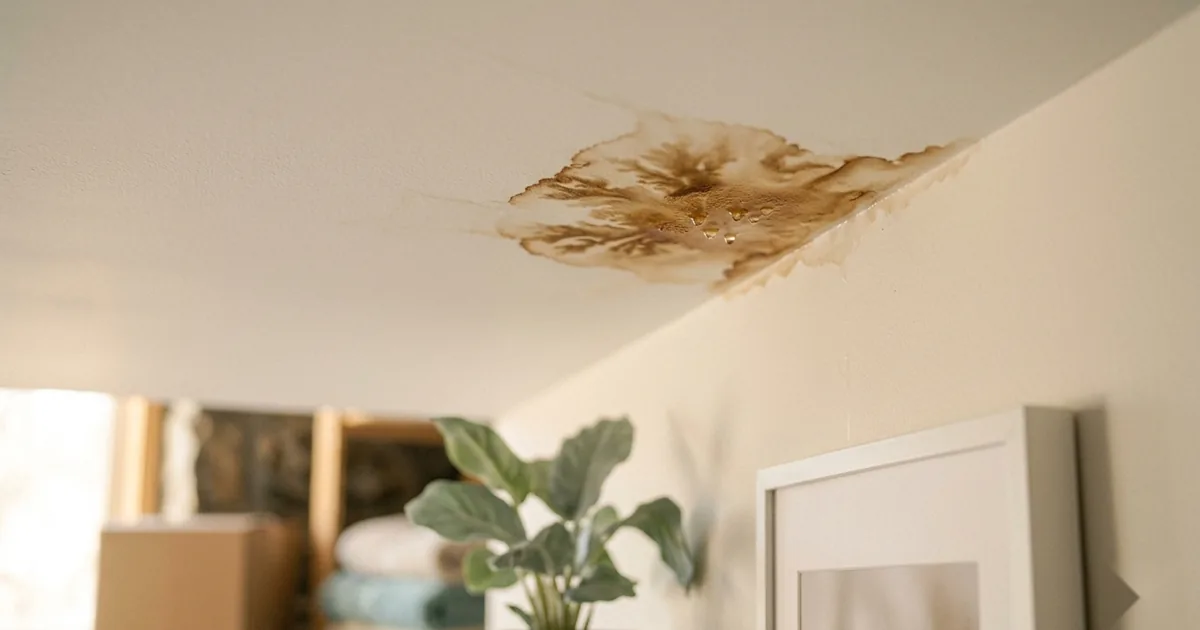
Small leak, small bill. That is the trap.
A slow leak barely registers. A few dollars a month on the water bill, if that. Nothing that demands attention, nothing that feels urgent. That is precisely why it is so dangerous: the cost of the water is tiny, but the water is not what bankrupts the repair. The damage is.
The gap between what a leak costs you today and what it costs you in six months is enormous, and most property owners never see it coming until the drywall is already soft.
The numbers behind water damage
Water damage is not a rare, unlucky event. It is one of the most common and most expensive problems property owners face. The figures the insurance industry reports tell the story:
- Roughly 40% of homeowners have experienced loss from water damage at some point.
- The average water damage insurance claim runs around $14,000.
- Every day, thousands of households discover a water emergency already in progress.
Sit with that middle number for a second. Fourteen thousand dollars, on average, from a category of problem that very often begins as a leak you could have stopped with a five-dollar part and a wrench, if only you had known it was happening.
For a commercial property, the same leak carries a second bill those residential figures never capture: the days you cannot open. Dried-out drywall is a repair line item with an end date. A closed dining room, an unusable exam room, or a warehouse aisle you cannot stock is revenue that no amount of remediation brings back.
How $20 of water becomes $14,000 of damage
The escalation is not dramatic. It is gradual, which is exactly why it works:
- Day one: a fitting weeps a few drops an hour behind a cabinet or inside a wall. Nobody notices. Your water bill ticks up by pocket change.
- Weeks in: the surrounding material stays damp. Wood swells. Particleboard cabinet bottoms begin to sag. Paint bubbles. The moisture has nowhere to go, so it soaks into everything nearby.
- A month or two in: the subfloor softens. Mold takes hold in the damp, dark space, because it only needs 24 to 48 hours of moisture to start. Now you are not just drying a spot, you are replacing material and treating for mold.
- The discovery: you finally find it, by smell, by a spongy floor, or by a stain that reaches a visible surface. By now the fix is not a plumber for an hour. It is remediation, demolition, and rebuild.
The water was never the expensive part. Time was. The longer a leak goes undetected, the further the damage travels, and the cost climbs with every day it stays hidden.
Why the worst leaks are the ones you cannot see
The leaks that generate those big claims are rarely the dramatic ones. A pipe that bursts and floods the kitchen gets fixed the same day, because you cannot miss it. The costly leaks are the quiet ones, in the places you never look:
- Behind and beneath appliances like dishwashers, washing machines, and water heaters.
- Inside walls and under sinks, where a slow drip can run for weeks.
- In basements, crawl spaces, and utility closets you visit a few times a year.
You cannot fix what you do not know about, and you cannot watch every hidden fitting on your property by hand. That is the real problem: not that leaks happen, but that they happen where and when no one is looking.
Detection is an investment, not an expense
This is where the math flips. Set against a $14,000 average claim, plus the deductible, the disruption, and the hit to your property’s value, the cost of always-on monitoring stops looking like a purchase and starts looking like insurance that actually prevents the loss instead of paying out after it.
That is the case for smart leak detection. A sensor like spooresLEAK watches the hidden spots continuously and speaks up the moment it finds moisture, and paired with the spooresVALVE automatic shutoff, it can cut the water before a drip becomes a demolition project. The point is not the gadget. The point is turning a $14,000 surprise back into the $20 problem it started as.
The takeaway
The cheapest time to deal with a leak is the first hour. The most expensive time is whenever you happen to find it. Small leaks do not stay small because they are harmless; they stay hidden, and hidden is what makes them costly.
Catch it early and it stays a footnote on your water bill. Join the waitlist to be first in line for our leak detection and shutoff devices.
Figures above reflect commonly reported insurance-industry data on residential water damage; exact numbers vary by source and year.