Signs of Hidden Mold on Your Property (and What to Do About It)
The most dangerous mold grows behind walls while its effects get blamed on allergies. The warning signs worth taking seriously.
Co-written with AI assistance from Claude Opus.
The mold you should worry about is the mold you cannot see
Visible mold is a nuisance, but at least it is honest: you can see it, so you deal with it. The mold that does real harm is the hidden kind, growing inside walls, under flooring, above ceilings, and behind cabinets, quietly affecting your air and your health while giving you almost nothing obvious to point at.
Because you cannot see it, hidden mold gets recognized by its side effects instead. Learn to read the signs, and you can catch a problem your eyes would miss.
Warning signs of hidden mold
A musty, earthy smell. This is the most reliable clue. If a room, a closet, or a cabinet has a persistent musty odor that cleaning does not fix, trust your nose. That smell is often the first and clearest sign of mold you cannot see.
Unexplained health symptoms that ease when you leave home. Hidden mold reveals itself through the body more often than the eyes. Watch for:
- Congestion, coughing, or a scratchy throat that will not clear.
- Sneezing, itchy eyes, or skin irritation that feels like allergies but never lets up.
- Headaches, fatigue, or a general “off” feeling at home that improves when you are away for a while.
If symptoms track with being in the house, and especially in one particular room, that pattern is worth taking seriously.
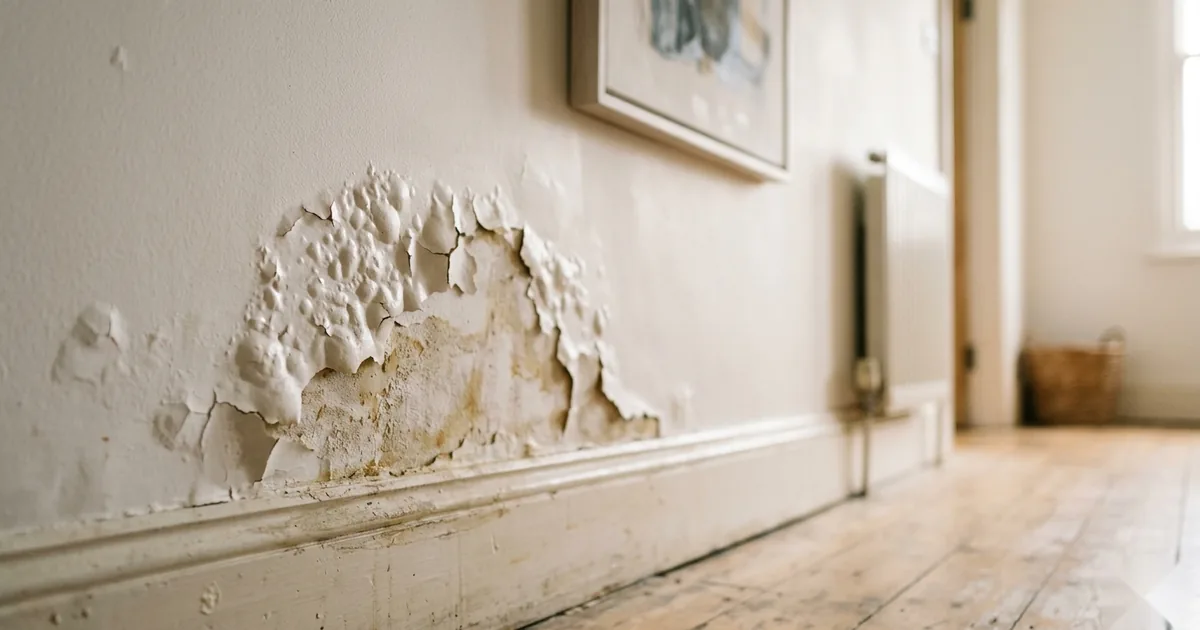
Discoloration and staining. Water stains, yellowing, or dark patches on walls, ceilings, or floors can mark moisture, and where there is hidden moisture, there is often hidden mold. Bubbling paint, peeling wallpaper, or warping materials point the same direction.
Signs of past or present moisture. Condensation on windows, a history of leaks, high indoor humidity, or a damp basement all mean the conditions mold needs are present. Mold does not grow without moisture, so chronic dampness is a standing invitation.
What to do if you suspect hidden mold
- Follow the moisture. Mold needs water, so trace the source. Check for leaks near where you notice the smell or symptoms: under sinks, behind appliances, around windows, in the basement.
- Look in the likely spots. Carefully inspect places that stay damp, cabinets, closets, behind furniture on exterior walls, and around plumbing.
- Do not disturb large growth yourself. Scrubbing a big patch of mold can send spores airborne and spread the problem. Small surface spots on non-porous materials can often be cleaned, but sizable or hidden growth is a job for professionals.
- Call in a professional for assessment. If you suspect significant or hidden mold, a mold assessment can locate it and gauge the extent. Remediation specialists can then remove it safely and address what fed it.
- Fix the water problem, or it comes back. Removing mold without stopping the moisture is temporary. The leak or humidity that caused it has to be resolved, or the mold returns.
The better move: prevent the conditions
Every one of those warning signs is a lagging indicator. By the time you smell must or feel run-down at home, the mold is already established. The winning strategy is to keep the conditions mold needs, moisture and elevated humidity, from forming in the first place.
That means two things: catch leaks immediately, and keep an eye on humidity. This is where environmental monitoring earns its keep. Our spooresLEAK sensor watches for moisture and tracks conditions like humidity and temperature, so you can catch a leak before it feeds a colony and see when a space is drifting into the damp, mold-friendly range. Paired with the spooresVALVE automatic shutoff, the water event that would have started the whole cycle gets stopped before it begins.
Preventing mold is mostly a matter of never letting a space stay wet long enough for it to start.
The takeaway
Hidden mold speaks in smells and symptoms, not sights. Take a persistent musty odor and unexplained at-home health complaints seriously, follow them back to moisture, and deal with the water, not just the mold. Better still, watch the conditions closely enough that the mold never gets its foothold.
Join the waitlist to be first in line for our leak detection and environmental monitoring devices.